Comfort Meets Style: Hearing Aids, Cochlear Implants and Baha Devices Redefined

A hearing device sits on the body for hours at a time. If it pinches, slips, rubs, squeals, clashes with glasses, or feels awkward with hair and clothing, even the best technology can become tiring to wear.
That is why comfort and style belong in the same conversation.
Modern hearing aids, cochlear implants, and Baha devices are no longer designed only to be hidden. Many people still prefer a discreet look, and that is valid. Others want colour, jewellery-inspired accessories, sport clips, soft headbands, or processor covers that match an outfit. The best choice is the one that feels secure, supports hearing needs, and fits naturally into daily life.
This article is informational only and is not a substitute for advice from an audiologist, ENT specialist, or hearing care professional. Device fit, programming, retention, and skin comfort should always be guided by qualified care.

Comfort begins with fit, not invisibility
For years, hearing devices were often described as something to conceal. Smaller sizes mattered most, and “nearly invisible” became a selling point. Discretion still matters for many wearers, but comfort asks a better question: can this device be worn all day without becoming the centre of attention?
That depends on fit.
A hearing aid that sits behind the ear needs enough stability to stay in place, but not so much pressure that it creates soreness. An earmould or dome should feel secure without blocking the ear in a way that feels heavy or irritating. A cochlear implant sound processor needs good placement over the internal implant and a magnet strength that holds well without causing discomfort. A Baha device or other bone conduction processor needs enough contact and retention to work as intended, while also respecting skin sensitivity and daily movement.
True comfort often comes from small details:
Weight balance
A lighter device may feel easier, but shape and placement matter too. A well-balanced processor can feel more comfortable than a smaller device that pulls or shifts.
Skin contact
Soft materials, clean surfaces, and the right retention choice can reduce rubbing around the ear, scalp, or abutment area.
Compatibility with glasses
Glasses, sunglasses, masks, hats, helmets, and hair accessories all compete for space around the ears and head. A comfortable setup leaves room for real life.
Battery and charging habits
Rechargeable devices can reduce small handling tasks, while disposable batteries may suit people who prefer quick swaps. Comfort includes how easy the device is to live with, not just how it feels on the body.
The most stylish device will not feel good if it creates pressure by lunch. The most advanced processor will frustrate someone if it catches on hair every time they change clothes. Comfort has to be personal, practical, and tested in the settings where the device will actually be used.
Style no longer means hiding the device
Fashion is not limited to clothing. It includes glasses, jewellery, watches, hair colour, piercings, headwear, and the small objects people carry every day. Hearing technology can fit into that same world.
Some wearers want their devices to blend with hair or skin tone. Others treat them as visible accessories. Both approaches are equally valid. The shift is that hearing devices can now support more than one kind of identity.
Behind-the-ear hearing aids may come in colours that range from soft beige and grey to rich brown, silver, black, or brighter shades. Receiver-in-canal styles can look clean and minimal. In-the-ear models can be shaped for a close fit inside the ear. Cochlear implant processors often allow covers, coils, clips, and retention accessories. Baha sound processors and softbands can be subtle, sporty, colourful, or playful.
For children, colour can turn a device into something fun and familiar. A bright band, patterned cover, or charm can help a child recognize the device as theirs. For teens and adults, style may be about control. A device can match hair one day, stand out at a concert the next, and sit neatly under a winter hat when needed.

Style choices can also serve practical goals. A clip that looks like a small accessory may prevent loss during sports. A headband may hold a processor securely during play. A decorative cover can protect against scratches. A charm can help identify a left or right device.
That is where Comfort Meets Style: Hearing Aids, Cochlear Implants and Baha Devices Redefined becomes more than a phrase. It points to a real design change. Hearing devices are not only sound tools. They are wearable technology, and wearable technology should respect both function and self-expression.
Discreet, bold, or flexible
There is no single best aesthetic. The better question is which style gives the most confidence in the most situations.
Preference | Style direction | Practical benefit |
Discreet | Hair-matching colours, clear tubing, slim processors | Helps the device blend into daily looks |
Expressive | Bright covers, patterned stickers, charms, colourful softbands | Makes the device feel personal and visible by choice |
Adaptable | Mix of neutral and statement accessories | Allows different looks for school, work, sport, and events |
Secure | Clips, sleeves, headbands, retention cords | Adds peace of mind during movement |
The goal is not to make every device fashionable in the same way. The goal is to offer enough choice that fashion becomes effortless.
Daily wear should feel easy from morning to night
A comfortable hearing setup has to survive a full day, not just a fitting appointment.
Morning might involve putting on glasses, brushing hair, adjusting a toque, and checking battery levels before leaving home. Midday could include sweat, wind, phone calls, public transit noise, or a gym class. Evening may bring quiet conversation, streaming audio, or removing accessories before bed.
Each moment can reveal a comfort issue.
A hearing aid wearer may notice that a dome feels itchy after several hours. A cochlear implant user may feel that a retention clip pulls during sports. Someone with a Baha device may find that a winter hat shifts the processor. These are not failures. They are clues that the setup needs fine-tuning.
A hearing care professional can help with the technical side, including mould shape, dome choice, tubing length, receiver wire fit, magnet strength, retention options, and feedback control. The wearer can help by paying attention to patterns.
Useful questions include:
Does discomfort happen right away or after several hours?
Is the pressure in one specific spot?
Does the device shift during exercise, chewing, or talking?
Do glasses or masks make the fit worse?
Does hair catch on a microphone, cable, coil, or clip?
Does the device feel different in cold weather or humidity?
Comfort has a physical side, but it also has an emotional side. A device that feels secure can reduce the constant urge to check whether it is still in place. A device that looks good can ease self-consciousness. A device that works with clothing and accessories can make getting dressed simpler.
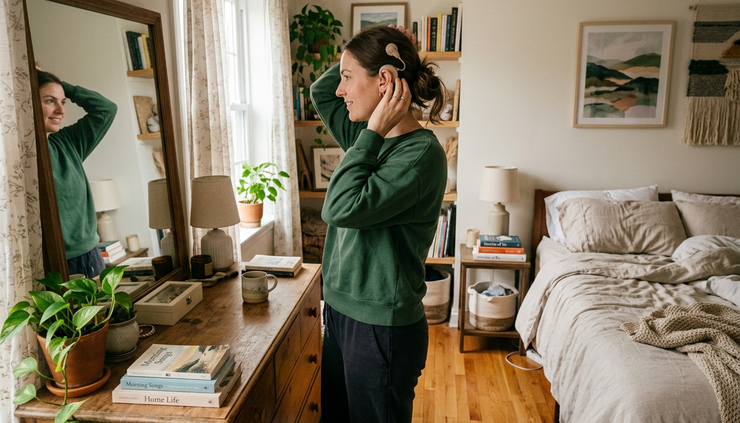
Seasonal life in Canada adds its own details. Cold weather brings hats, scarves, hoods, and static. Summer brings sweat, sunscreen, sunglasses, and outdoor activity. A setup that feels perfect in April may need small changes in January or August.
That could mean:
Choosing a thinner hat that does not press hard on a processor
Using a sweat-resistant accessory during sports
Keeping a drying kit or charger in a consistent place
Cleaning skin-contact areas as recommended
Packing spare batteries, a power bank, or a case for long days
Selecting clips or cords for skiing, cycling, playgrounds, or travel
None of this needs to make hearing technology feel precious or fragile. Good planning does the opposite. It makes the device easier to wear without constant thought.
Fashion accessories should support the device, not fight it
Accessories can make hearing technology more comfortable and more expressive, but they should never interfere with how the device works.
That is especially true for microphones, battery doors, coils, magnets, abutments, and sound processors. Covering the wrong part of a device can reduce sound quality, trap moisture, block controls, or create pressure. Decorative items should be made for the device type whenever possible, and any change that affects fit or skin contact should be checked with a hearing care professional.
Good accessories tend to do three things well:
They hold the device securely.
They avoid blocking microphones or moving parts.
They feel comfortable against skin, hair, and clothing.
A softband for a bone conduction processor, for example, needs to place the processor correctly. If it looks great but slides out of position, it will not serve its purpose. A cochlear implant coil cover should not change magnet comfort or cause extra pulling. A hearing aid charm should be light enough that it does not tug behind the ear.
The same thinking applies to everyday fashion choices.
Scarves and high collars can brush against devices. Long earrings may click against a processor. Thick glasses arms can crowd the space behind the ear. Hair products may leave residue. Helmets need careful planning so they can be safe and comfortable without dislodging hearing equipment.
This does not mean style needs to shrink. It means style works best when it respects the device.
Simple style habits that protect comfort
Small routines can keep fashion and function moving together:
Put hearing devices on after hair products have dried.
Check that microphones are not covered by hats, hair, or decorative skins.
Use retention accessories during sports, crowded events, or travel.
Keep a protective case nearby when removing devices in restaurants, pools, change rooms, or cars.
Clean covers, bands, and clips regularly, especially after sweat or sunscreen.
Rotate accessories if one area of skin feels irritated.
Ask before using adhesives, paints, or stickers not designed for the device.
For children, labels and colour coding can help families, teachers, and coaches handle devices with more confidence. For adults, a small accessory kit can make it easier to adapt during the day: a clip for windy weather, a neutral cover for formal events, a bright cover for weekends, and a case for quick storage.
The best accessory is not always the most visible one. Sometimes it is the one that prevents a device from falling during a run, keeps a processor steady under a helmet, or makes a child excited to put it on each morning.

A better hearing device experience feels personal
The future of hearing technology is not only about smaller devices or stronger processors. It is also about better daily experiences.
Comfort solves the physical barriers. Style solves the identity barriers. Together, they help hearing aids, cochlear implants, and Baha devices feel less like equipment and more like part of a person’s routine.
That does not mean every device must be decorated. A clean, barely visible look can be just as intentional as a bright patterned processor cover. A person may choose neutral colours for work, bold accessories for a festival, and extra retention for the gym. The freedom to choose is the point.
The most successful setup usually comes from a mix of professional fitting and personal trial. Audiologists and hearing care teams bring knowledge about sound, positioning, safety, and skin health. The wearer brings knowledge about hair, clothing, habits, movement, and confidence. Both matter.
If a device feels uncomfortable, slips often, causes irritation, or seems hard to style, it is worth asking for help rather than simply tolerating it. A small adjustment can make a large difference. A new mould, a different dome, a lighter accessory, a better clip, or a colour that feels more natural can change the whole experience.
Hearing technology has moved beyond the idea that comfort and fashion are extras. They shape whether people wear their devices consistently, confidently, and comfortably. The best design is not only heard. It is lived in.


Comments